Five Generations from home
Yaffa
I’m of orange groves fed by the sea, olive trees held by wheatgrass fields that span generations, destiny written again and again with my people's blood, genocide raising nameless borders separating the olive from the tree, the orange from the sea, the wind from its home.
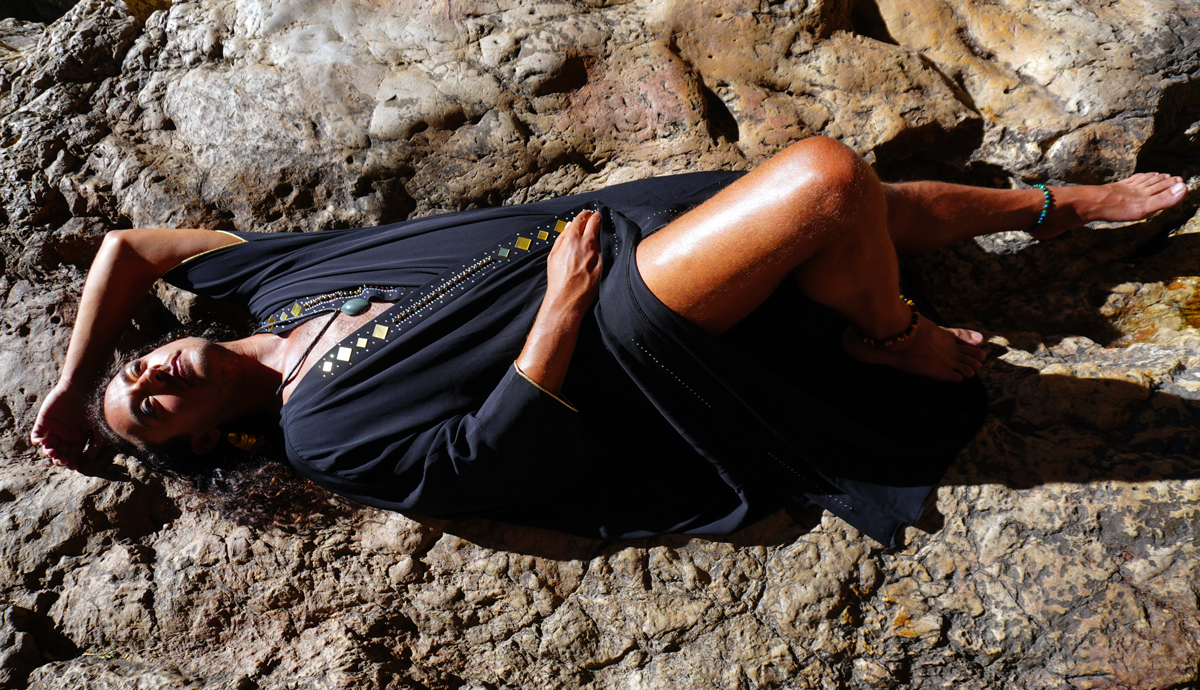
Yaffa, the author, during a photo shoot. Photo: Andrea Ramos Campos
I watch the sunset everyday over this invisible border, olive trees swaying in the wind that doesn’t know where to go next. Home is less than a few km away, a km for every generation displaced, never to set foot on the land where our ancestors are buried, where we dream of being buried.
To be Palestinian, like so many other peoples impacted by imperialism, is to yearn: yearn for home, yearn for security, yearn for stability, yearn for community. The land unfolds beneath me, yet I wonder why the land can carry me when most people can not. I am queer as a Palestinian, and I am queer in stealing the lightest of touches with my partner in public—all public, the Global North feasting on my love like vultures, while the Global South witnesses me as a repercussion of the settler colonialism genociding us. I am queer in a gender that never knew itself, between Islamophobia, ableism, and heteronormativity.
When you’re trying to survive daily due to other constant threats the labels of queerness and transness are not a priority.
I have known that I am queer and trans my entire life, as surely as I have known that I am Palestinian, as surely as I have known white supremacist imperialism. The world has also always known, yet neither of us could name what it was that was different about me. I couldn’t name my queerness and transness until my early twenties. When you’re trying to survive daily due to other constant threats the labels of queerness and transness are not a priority—or at least they weren’t for me. It wasn’t being queer and trans that made me unhoused at 16, they weren’t what made me suicidal, they weren’t what birthed me homeless on the other side of an invisible border.
For the first two decades of my life it wasn’t queerness or transness that were suffocating me. I’m grateful, because that’s not the case for many queer and trans individuals. I was fortunate, I grew up in a community that cared for one another under a spiritual practice of Islam that centered liberation and care for the most marginalized of the most marginalized. Like many other communities with immense external threats we didn’t have the privilege to cannibalize different parts of ourselves. I didn’t grow up hating queerness or transness. I grew up hating whiteness and patriarchy. By the time I was twelve that practice and the community that held me were only in memories, neither fact nor fiction, just what I make of them. I’ve always had a beautiful ability to remember the liberatory practices, remember the harm between community, and learn from everything. I learned community care. I learned a deep sense of justice. I also learned what happens when parts of the community assimilate. I learned what FBI entrapment does. I witnessed communities built on love become predatory, seemingly overnight becoming transphobic, homophobic, ableist, so many things that defied their humanity.
Queerness, to me, is the inability to assimilate into systems of oppression.
I’ve lived in ten countries the last twenty years, each expelling me within a few years, unable to assimilate into their systems of oppression. Queerness, to me, is the inability to assimilate into systems of oppression. I am not queer because of my sexual attraction to all genders, I am queer because I was born Muslim, Palestinian, Global South citizen and autistic. Queerness is about marginalization, it is political regardless of our interest in politics because our lives as queer people are political with or without our consent. I am queer and I yearn to build a world where I may be gay. In a liberated world without heteronormativity we can be gay without being marginalized—no longer queer.
My queerness allows me to claim my other identities—my other marginalized identities allow me to claim my queerness. I am a better Muslim because I am queer and only understand my queerness because of Islam. I understand my queerness because I am autistic, and understand who I am as an autistic person through my queerness. Everything is tied, queerness reminding me that my identities exist differently in a liberated world.
Perhaps the thing that makes me the most queer is my belief in a liberated world. It’s easy to believe in the apocalypse, in dystopia. Believing in utopia is naive and foolish at best. Yet I believe humans are meant to live liberated lives, and we have thousands of years of history to prove that white supremacist imperialist is not all there is. My transness proves this everyday. I live outside of the margins society pushes me towards. I live a life filled with joy, care and wellness, all because I—and my trans community claim our lives fully every day. My work represents this reality. As the rest of the world ravages us we care and love one another. All my work over the years has been to support the most marginalized of the most marginalized.
Currently, I focus on trans people impacted by genocide, supporting our people in Gaza, Sudan, Kashmir, and so many other areas. I support folks with resources to survive, to share their stories, to heal our wounds recognizing that most of our wounds when we experience genocide are not due to transness. I am also mindful of the brewing genocide against trans folks in what’s known as the United States, a genocide being exported globally. We have a lot of infrastructure building to do, but they have been trying to erase us all along and we still are.
My work is first and foremost as an organizer. Then I am a culture worker, using my visual art and writing to support world building. I am the author of 9 books, many of which have been translated to various languages. Recently Naranja Sangre was published in Spanish globally. The work continues, we continue. We are everlasting.
Organizer and writer